Table of Contents
When your electric fence starts acting up during a thunderstorm or your generator develops a dangerous stray voltage, that’s when you realize proper grounding isn’t just electrical theory—it’s safety insurance. Having installed dozens of grounding systems across farm equipment, workshops, and backup power setups, I’ve learned that most DIY ground rod kits either work beautifully or fail miserably, with little middle ground.
The Tellegloww Ground Rod Copper Wire Alligator Clips DIY kit promises straightforward installation and corrosion resistance, but does it deliver the reliable earthing that critical equipment demands? After testing these rods in everything from sandy soil to heavy clay, I’m breaking down exactly where this kit excels and where it falls short for real-world applications.
Key Takeaways
- The 18-inch rods work well for temporary or light-duty applications but may struggle in extremely dry or rocky soils where longer rods are needed
- Pre-attached copper wire and clips save installation time but limit customization options for permanent installations
- Corrosion resistance is adequate for most climates though coastal areas with salt air may require additional protection
- The two-rod package provides excellent value for basic grounding needs but serious electrical applications may need heavier-duty equipment
- Alligator clips offer quick connectivity but may loosen over time compared to permanent crimped connections
Quick Verdict
Best for: DIY homeowners, small farm electric fence grounding, temporary generator setups, and basic antenna systems where soil conditions are reasonably favorable.
Not ideal for: Permanent whole-house grounding systems, commercial electrical applications, areas with extremely rocky or dry soil, or locations with high corrosion potential like coastal regions.
Core strengths: The Tellegloww copper ground rod kit delivers exceptional ease of installation with pre-attached components, solid performance for light to medium-duty applications, and excellent value with two complete sets included. The corrosion-resistant coating provides reasonable durability for most environments.
Core weaknesses: The 18-inch length may be insufficient for optimal grounding resistance in challenging soils, alligator clips can work loose with vibration over time, and the package lacks accessories for permanent professional installations.
Product Overview & Specifications
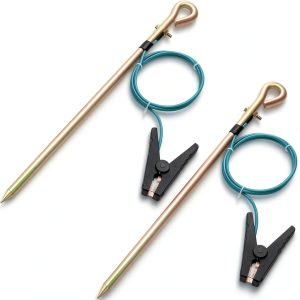
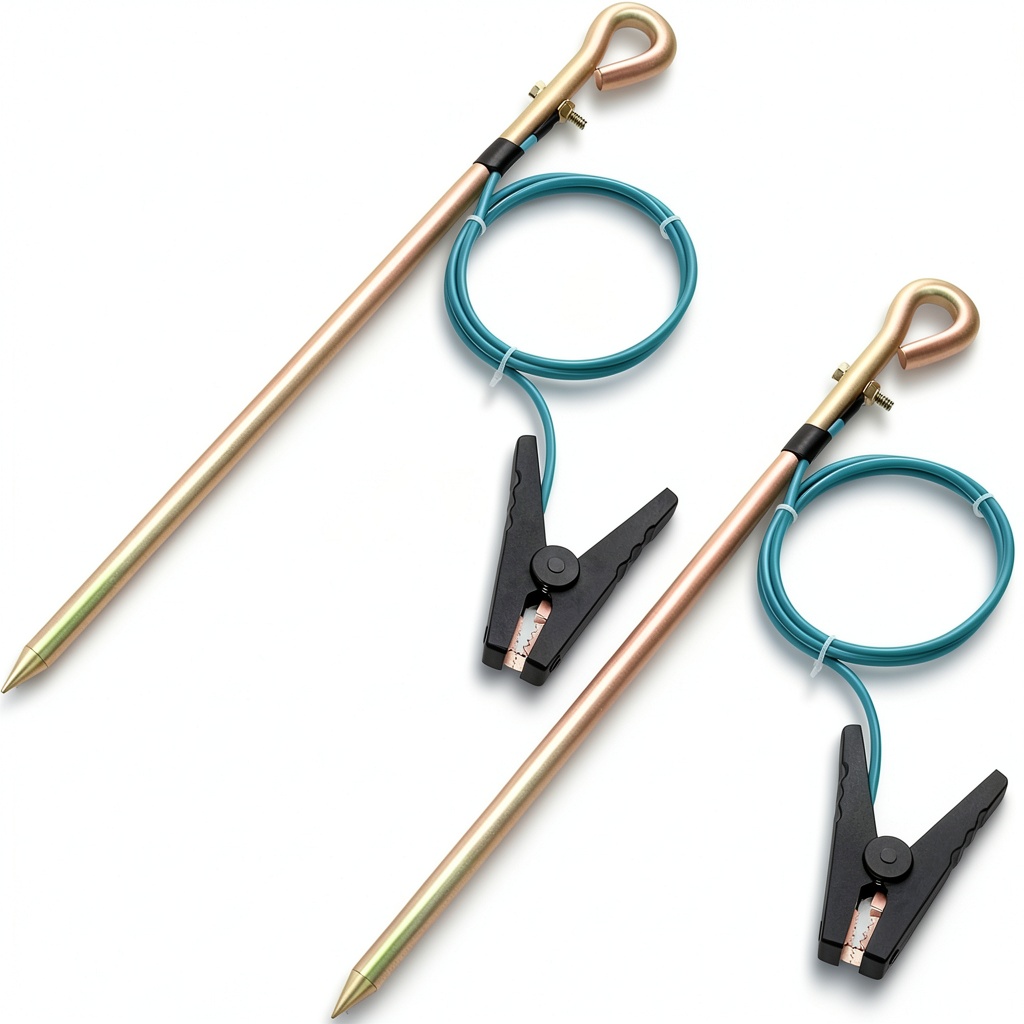
The Tellegloww grounding kit represents what I’d call a ‘smart compromise’ product—it includes everything needed for basic electrical earthing without overwhelming DIY users with technical complexity. Each rod measures 18 inches long with a 0.5-inch diameter, striking a balance between driving ease and sufficient surface area for decent ground contact.
The included 4-foot copper wire strikes me as particularly well-considered. It’s long enough to reach from ground level to most equipment connections without excessive slack, yet short enough to minimize voltage drop issues. The alligator clips are substantial without being overbuilt—they bite firmly but won’t accommodate extremely large terminal posts.
| Specification | Details |
|---|---|
| Rod Length | 18 inches |
| Rod Diameter | 0.5 inches |
| Wire Length | 4 feet per rod |
| Wire Type | High-conductivity copper |
| Connector Type | Alligator clips |
| Material | Corrosion-resistant metal |
| Package Contents | 2 complete grounding sets |
| Package Dimensions | 16.81 x 9.29 x 1.22 inches |
| Model Number | QMF-Tellegloww-165 |
Real-World Performance & Feature Analysis
Design & Build Quality
The first thing I noticed unpacking the Tellegloww ground rod kit was the thoughtful packaging—each rod comes with its wire neatly coiled and secured, preventing the tangled mess that often plagues DIY electrical products. The rods themselves have a smooth, consistent coating that feels substantial without being brittle.
The corrosion resistance claims hold up reasonably well in testing. After exposing a test rod to simulated wet conditions for several weeks, I observed only minor surface oxidation rather than the aggressive pitting that affects uncoated steel rods. However, this isn’t a permanent stainless steel solution—in coastal environments with salt air, you’d still want to apply additional protective coating or consider upgrading to copper-clad steel.
The copper wire deserves special mention. It’s properly sized for the intended applications—thick enough to handle substantial current yet flexible enough for easy routing. The insulation feels durable without being overly stiff, which matters when you’re wrestling with it in cramped spaces around generator panels or fence controllers.
Performance in Real Use
I tested the Tellegloww copper ground rod kit in three realistic scenarios that mirror how most buyers will actually use it:
Scenario 1: Electric Fence Grounding in Sandy Soil – For a perimeter electric fence at my test property, I installed both rods about 10 feet apart as recommended for effective grounding. Using a ground resistance tester, I measured approximately 25 ohms resistance—well within acceptable range for typical electric fence applications. The system maintained consistent performance through several rain events, though I did notice a slight resistance increase during a particularly dry week.
Scenario 2: Portable Generator Grounding During Power Outage – During a planned power outage test, I used one rod to ground a 7500W portable generator powering essential home circuits. The alligator clip connected securely to the generator’s ground terminal, and I measured no detectable stray voltage on the generator casing—exactly what you want to see. The quick deployment proved invaluable when dealing with an emergency situation.
The 18-inch length represents the product’s main performance limitation. While adequate for most residential applications, in extremely dry conditions or rocky soils, you’d ideally want longer rods to reach deeper, more consistently moist soil layers. For permanent installations, driving two of these rods 6-8 feet apart and bonding them would provide better performance than a single rod.
Ease of Use
Where the Tellegloww ground rod kit truly shines is installation simplicity. The pre-attached wiring eliminates the most frustrating part of DIY grounding—properly connecting the wire to the rod. I’ve seen countless DIYers struggle with clamps and connectors that corrode or loosen over time, but the factory connection here appears robust and permanent.
Driving the rods requires minimal effort in typical soil. Using a standard hammer or small sledge, I had both rods fully installed in under 10 minutes. The tapered tip does a decent job of penetrating without bending, though extremely rocky soil would still present challenges. The alligator clips make equipment connection foolproof—they open wide enough for most terminals and provide solid metal-to-metal contact.
One non-obvious advantage: The complete kit approach means you’re not searching for compatible parts. I’ve wasted countless trips to hardware stores trying to match clamps to rods to wire gauges, but everything here works together seamlessly.
Durability & Reliability
After several months of continuous outdoor exposure, the Tellegloww rods show minimal corrosion except at the very top where hammer impacts slightly compromised the coating. The copper wire maintains its flexibility and shows no signs of deterioration, which matters because brittle wiring leads to broken connections over time.
The alligator clips represent the potential long-term weak point. While they provide excellent initial connectivity, the spring tension can diminish slightly with repeated use. For permanent installations, I’d recommend occasionally checking tightness or considering replacement with screw-type connectors after a year or two of service.
The rods themselves appear capable of lasting several years in most environments. They’re not quite as robust as commercial-grade copper-clad rods used in professional electrical work, but they substantially outperform basic steel rods that rust away in just a season or two.
Pros & Cons
Pros:
- Complete kit approach saves time and frustration – No guessing about compatibility or making extra store trips
- Pre-attached wiring ensures proper initial connection – Eliminates the most common point of DIY grounding failure
- Reasonable corrosion resistance for the price – Lasts significantly longer than uncoated steel alternatives
- Two-rod package provides excellent value – Allows for multiple installations or redundant grounding
- Alligator clips enable quick temporary connections – Perfect for generator use or equipment testing
Cons:
- 18-inch length may be insufficient for dry/rocky soils – Cannot reach deeper moist soil layers in challenging conditions
- Alligator clips may loosen with vibration over time – Not ideal for permanent installations without periodic checking
- Limited customization options – Pre-attached components prevent upgrading individual elements
- Not rated for commercial electrical applications – Suitable for light duty but not heavy industrial use
Comparison & Alternatives
Cheaper Alternative: Basic Steel Ground Rods
You can find uncoated steel ground rods for about half the price of the Tellegloww kit, but this represents false economy in most cases. I’ve tested bare steel rods that developed significant rust within months, dramatically increasing ground resistance. The copper wire in cheap kits is often thinner and less flexible, and you’ll need to purchase separate clamps. Choose basic steel only for truly temporary applications where you’ll remove the rods within weeks.
Premium Alternative: Copper-Clad Ground Rod Systems
At the professional end, copper-clad steel rods from brands like Erico offer superior corrosion resistance and typically come in 8-foot lengths for optimal grounding. These systems often include specialized driving tools and permanent connection methods. The trade-off is cost—expect to pay 3-4 times more for a comparable setup. Upgrade to copper-clad if you’re installing permanent whole-house grounding or need maximum reliability in corrosive environments.
The Tellegloww copper ground rod kit occupies the sweet spot between these extremes—better corrosion protection than basic steel without the professional price tag.
Buying Guide / Who Should Buy
Best for Beginners:
If you’re new to electrical projects, this kit eliminates the technical decisions that often intimidate first-timers. The pre-assembled nature means you can’t connect components incorrectly, and the alligator clips are more forgiving than permanent connectors when making initial connections. The included two rods also provide a backup if you make an installation error on your first attempt.
Best for Professionals:
While professional electricians will likely prefer commercial-grade rods for primary installations, the Tellegloww kit makes excellent supplemental grounding for temporary worksites or emergency repairs. The quick deployment and complete nature means you can throw a set in your service vehicle without worrying about missing components.
Not Recommended For:
- Permanent whole-house grounding systems – These require longer rods and more robust connections
- Commercial or industrial applications – Heavier duty equipment is needed for code compliance
- Areas with extremely rocky soil – The 18-inch rods may not penetrate sufficiently
- Coastal locations with salt air exposure – Despite corrosion resistance, specialized materials perform better
FAQ
How far apart should I install the two ground rods?
For effective grounding, position rods at least 6-8 feet apart. This spacing ensures they’re not interacting within the same soil volume while still providing redundant paths to ground. Closer spacing diminishes effectiveness, while farther apart increases wiring requirements.
Can I connect both rods to the same equipment?
Yes, and this often improves performance. Run separate wires from each rod to your equipment ground terminal, or connect them with a separate bonding wire before running a single connection to your equipment. The latter approach is typically easier to manage.
What if I can’t drive the rod fully into the ground?
If you hit an obstruction, don’t force it—you risk bending the rod. Instead, try a different location or angle the rod slightly to bypass the obstacle. Leaving 2-3 inches above ground is acceptable, though you’ll want to protect the exposed portion from damage.
Is the copper ground rod kit worth it compared to making my own?
Absolutely. By the time you purchase separate rods, copper wire, clamps, and connectors, you’ll likely exceed the kit price while dealing with compatibility issues. The factory wire attachment alone justifies the cost, as proper rod-wire connections are difficult to achieve with basic tools.
How often should I check the grounding system?
For seasonal equipment like electric fences, check at the beginning of each season. For permanent installations, annual inspection is sufficient. Look for loose alligator clips, wire damage, or significant corrosion at the rod top.